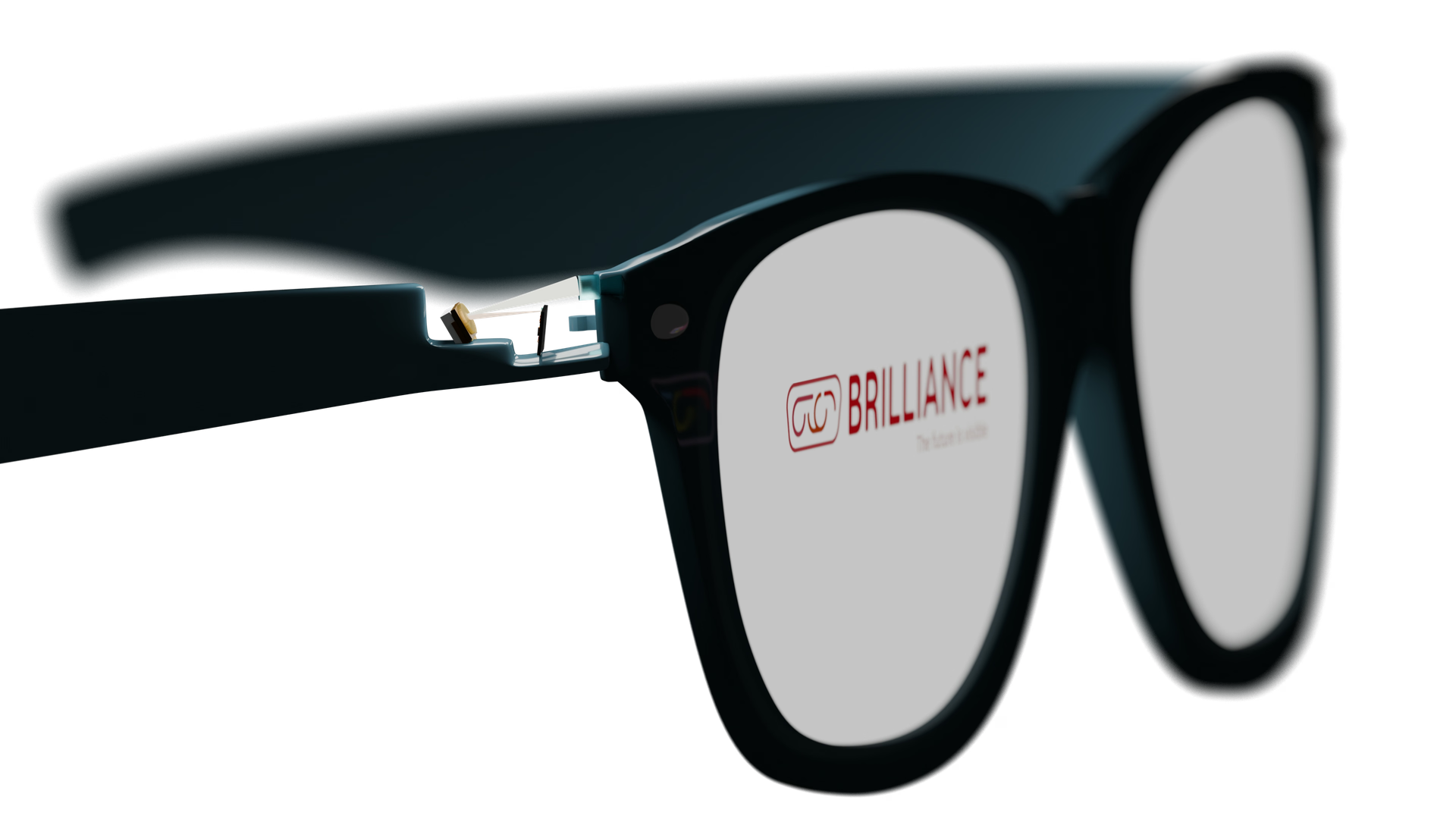
An AR image has to compete with whatever is behind it. In a lit room that is a low bar. In daylight the real world wins easily, and the projected image washes out — which is why so many AR demos happen indoors.
Why daylight is the hard case
Brightness is not free. Every extra nit on the eye costs power, and power costs battery and heat in a device worn on the face. Limited dynamic range is one of the standing constraints on wearable AR: without it, the device is an indoor device.
Where the brightness comes from
Lasers help on two fronts at once. A coherent source gives high brightness and contrast, so the image survives a bright background; and because a laser has a very well-defined wavelength, the colours are pure and saturated rather than approximated. The beam is also well-behaved enough to be focused into a sub-micron spot, which makes it far easier to couple into a waveguide without throwing away optical power on the way.
We're able to control the shape of the laser beam as it exits the chip.
Tim Tiek, CEO, Brilliance
What it buys the rest of the device
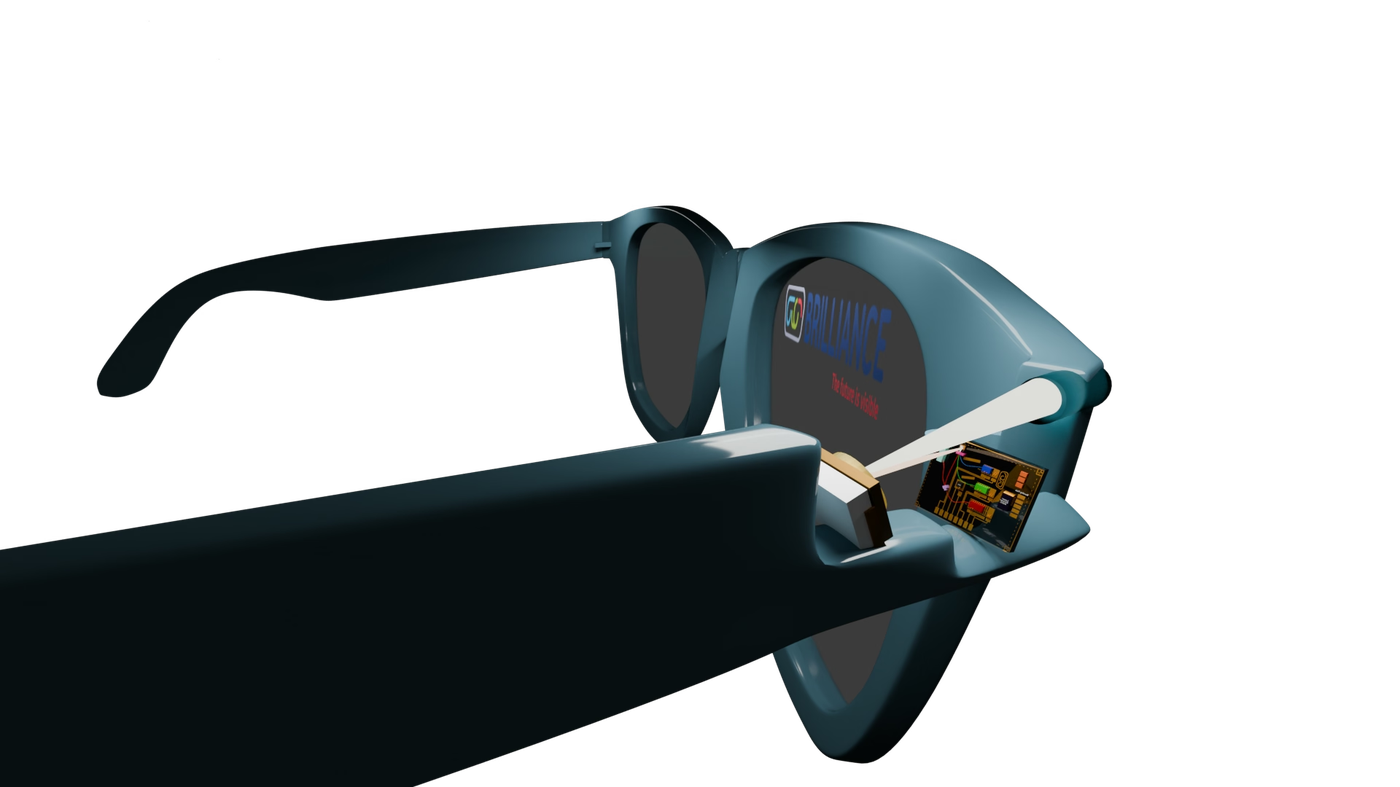
Against the alternatives, the integrated approach is around ten times smaller, draws roughly twenty times less power, and is about five times brighter for outdoor use. Those numbers compound rather than trade off: a smaller, cooler, more efficient engine relaxes the constraints on the optics, the housing and the battery around it.
That is the point of putting the whole light path on one chip — not brightness for its own sake, but a brightness budget that leaves room for a device someone will actually wear outside.