Why everyday AR has been waiting on the light source
6 min read · Jan 2026
For augmented reality to live in glasses people actually want to wear, the projector has to disappear. The display engine — not the optics, not the software — is the part that has kept AR bulky. Here is how a fully integrated RGB laser engine changes the equation.
The promise of augmented reality has always been simple: digital content laid cleanly over the physical world, in a device no heavier than the glasses already on your face. The challenge has never really been the content. It has been getting a full-colour image bright enough, small enough, and efficient enough to fit inside a temple arm — and to last a day on a battery you would actually tolerate carrying.
That is a light-source problem. Conventional projection stacks combine separate red, green, and blue sources with bulky beam-combining optics. The result is comfortably the largest, hottest, and most power-hungry component in the system. Shrink everything else and the light engine is still in the way.
A system on a single chip
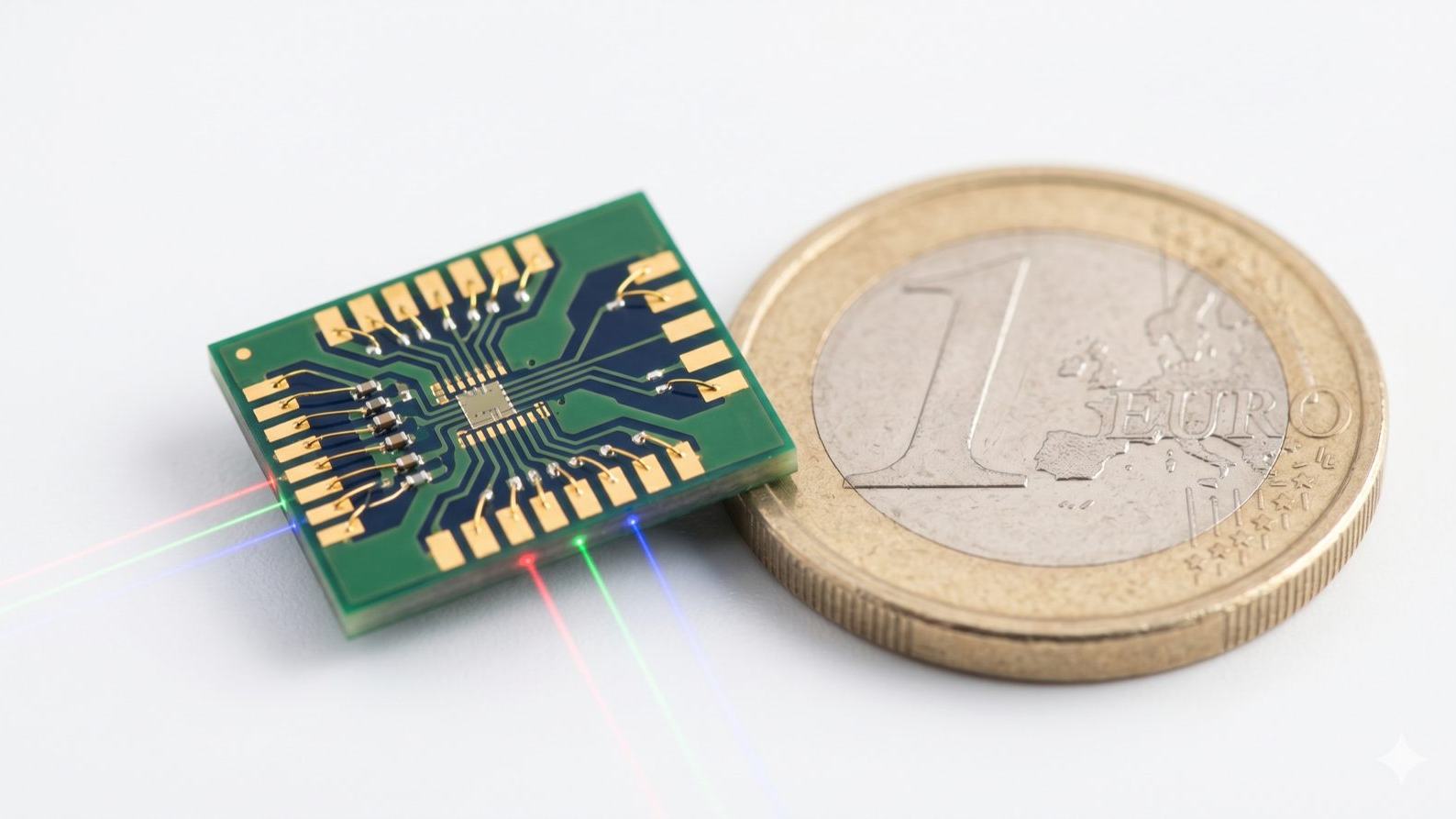
Brilliance RGB's approach is to integrate the components needed to generate and combine red, green, and blue laser light onto one photonic chip, rather than assembling them from discrete parts. Because the chip is produced on wafer scale using regular semiconductor processes, the same qualities that make modern electronics cheap and consistent — high yield, tight tolerances, volume manufacturing — start to apply to the AR light source too.
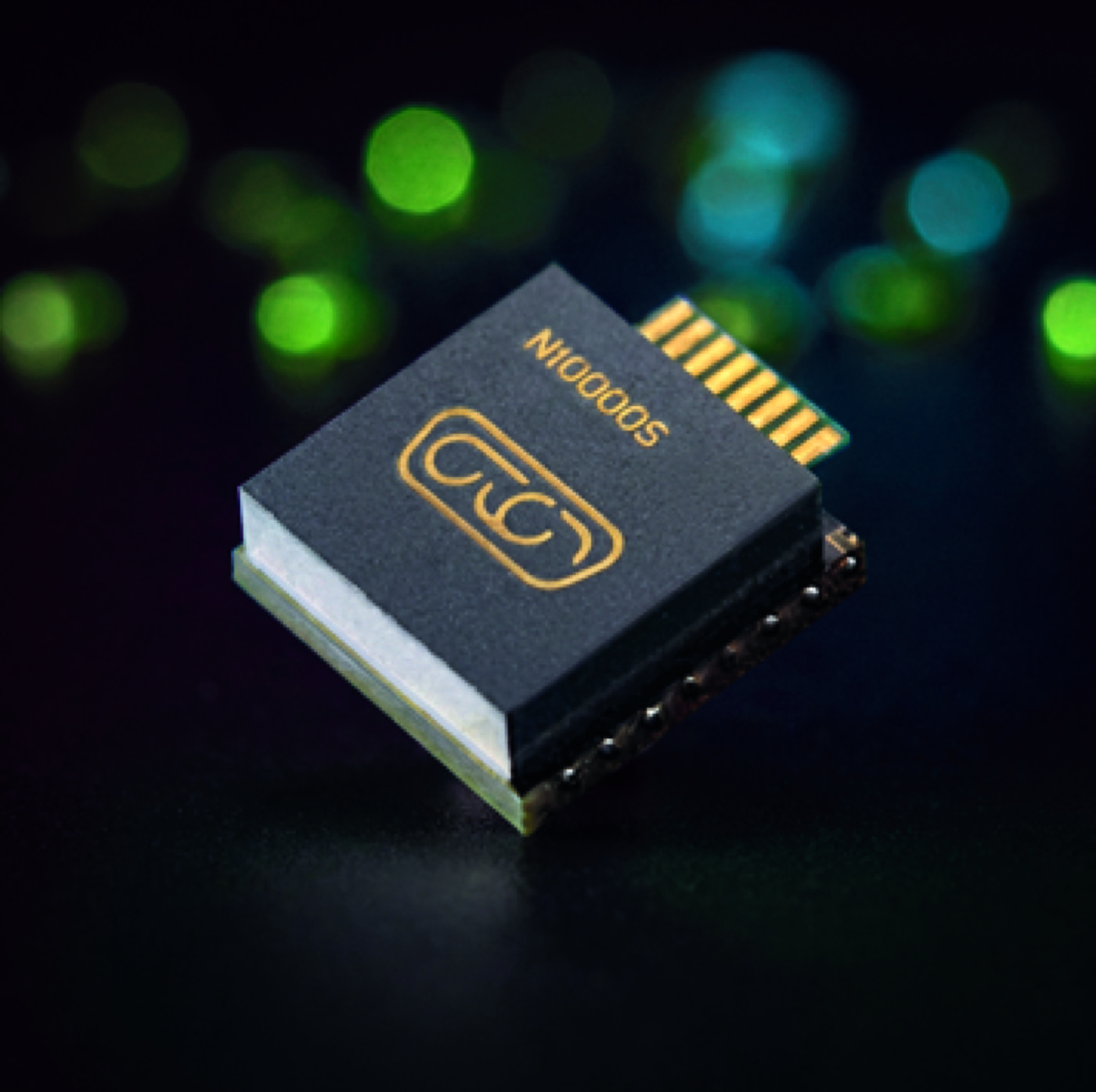
Shrink everything else in a pair of AR glasses and the light engine is still in the way. So that is where we started.
What integration unlocks
Once the light engine is a single SMD-style component, it can be placed into a projection module the way any other chip is placed onto a board. That reframes AR glasses from a delicate optical assembly into something closer to a manufacturable consumer product. It also compounds: a smaller, cooler, more efficient engine relaxes the constraints on every part around it — the optics, the housing, the thermal design, and the battery.
This is the thread that runs through the Neptune and Luna product lines: take the hardest part of the AR display, make it integrated and mass-producible, and let the rest of the device get lighter as a consequence. The future, as the tagline goes, is visible — but only once the thing that makes the light is finally small enough to forget about.