Integrated RGB area luminator
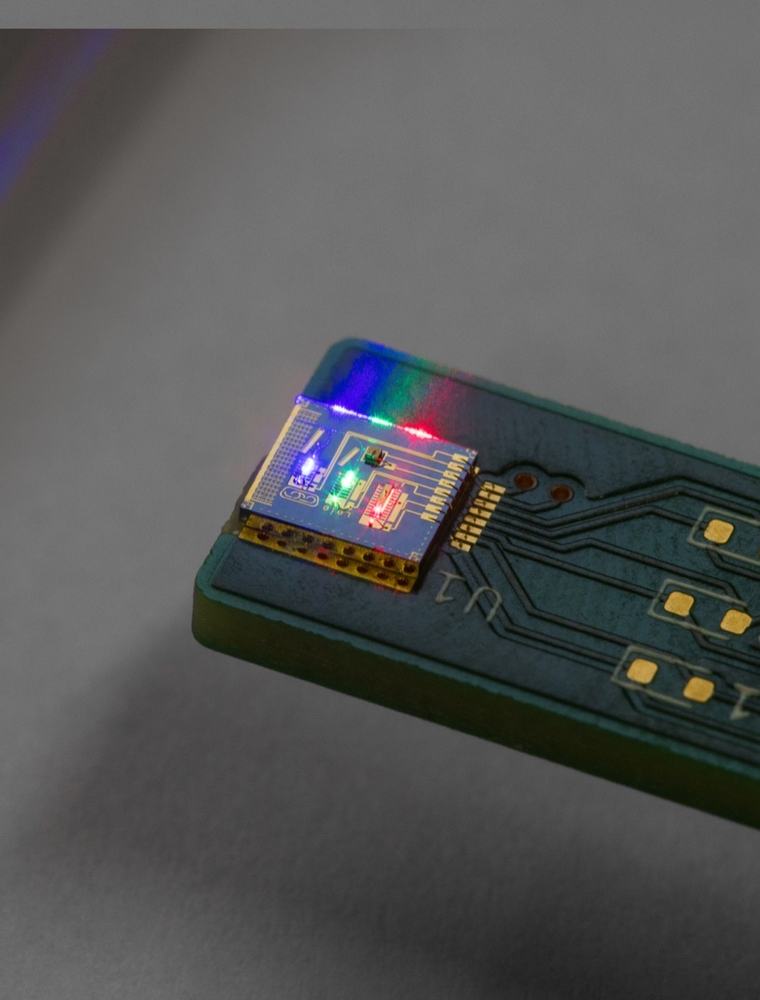
Red, green and blue combined into one module — a full-colour area field, not a scanned point, built for LCoS-class engines.
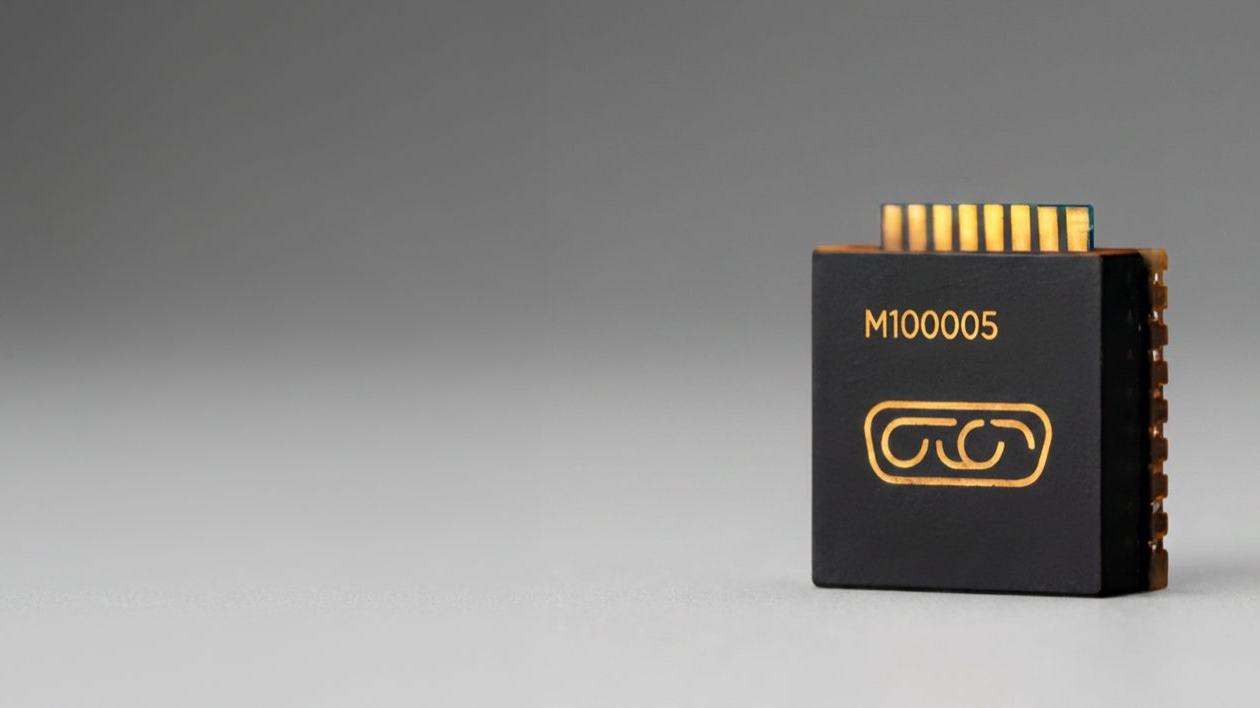
Where Neptune scans a single circular beam, Luna spreads integrated red, green and blue sources into a uniform, homogenised illumination field — the flat, full-colour backlight an LCoS micro-display needs to form a complete image at once.
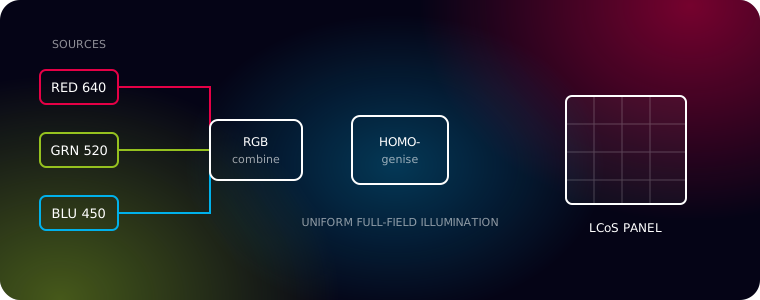
01 · Integrated RGB sources
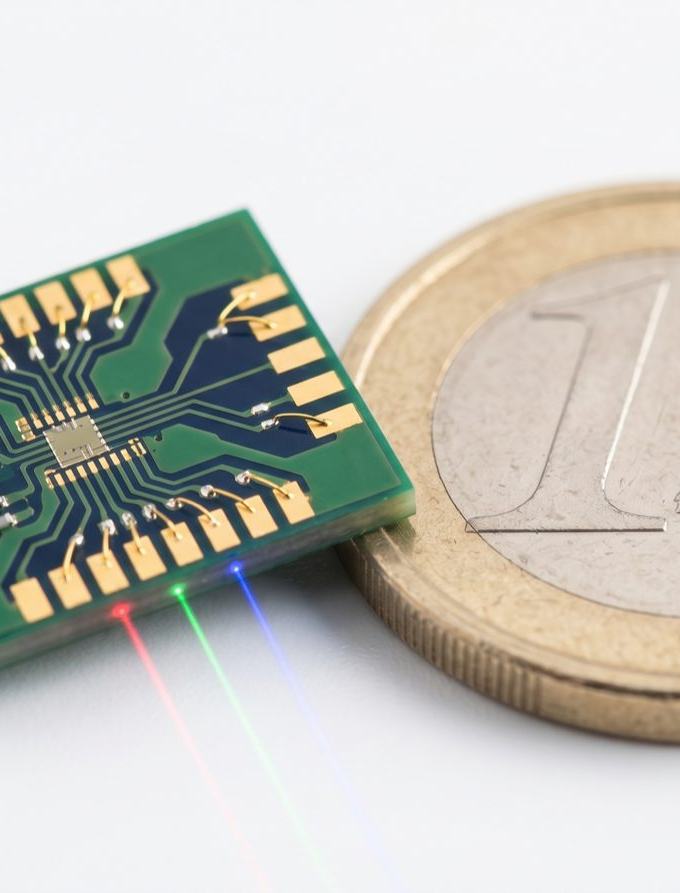
Single-mode red, green and blue grown on one chip — the same source platform proven in Neptune.
02 · Combine & homogenise
On-module optics merge the three colours and flatten them into an even intensity profile across the field.
03 · Illuminate the panel
A uniform full-colour field lights the LCoS micro-display so a complete frame is formed in one exposure.
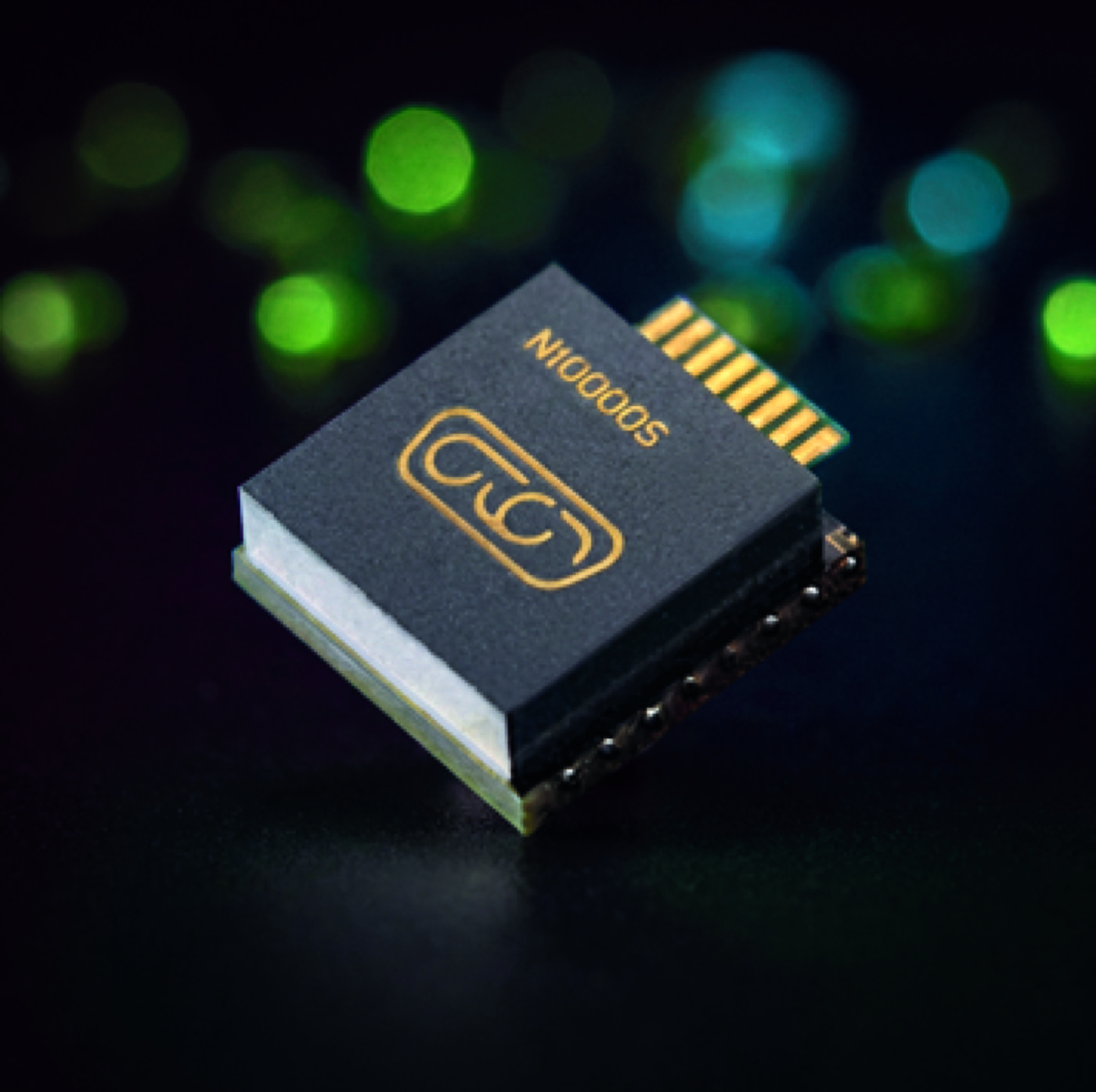
| Integrated RGB light source | Red, green, blue combined on chip |
|---|---|
| Full-field illumination | Uniform area output, not a scanned point |
| LCoS-optimised | Matched to micro-display panels |
| Single-mode wavelengths | RGB 450 / 520 / 640 nm (target) |
| Compact module | Footprint to confirm |
| High efficiency | Integrated optics reduce optical loss |
Our area luminator: an integrated RGB illumination engine that delivers a uniform full-colour field for LCoS-class displays — bringing the size and efficiency benefits of integrated photonics to full-field AR projection.
| Architecture | Integrated RGB area luminator |
|---|---|
| Display class | LCoS / micro-display |
| Wavelengths | 450 / 520 / 640 nm (target) |
| Luminance | To confirm |
| Package size | To confirm |
| Availability | Sampling 2H 2026 |
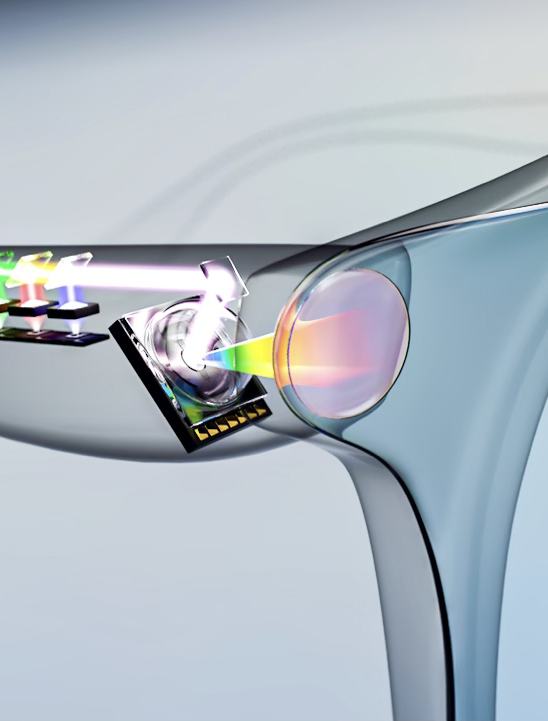
Uniform full-colour fields for lightweight, see-through AR eyewear.
Bright, even illumination for automotive and avionics HUDs.
Compact full-field engines for embedded pico-projectors.

A homogenised backlight for LCoS-class near-eye display engines.
Engineered for safe near-eye operation
Compliant materials and processes
Proprietary integrated photonics
Standard semiconductor production
Expected kit contents (provisional):
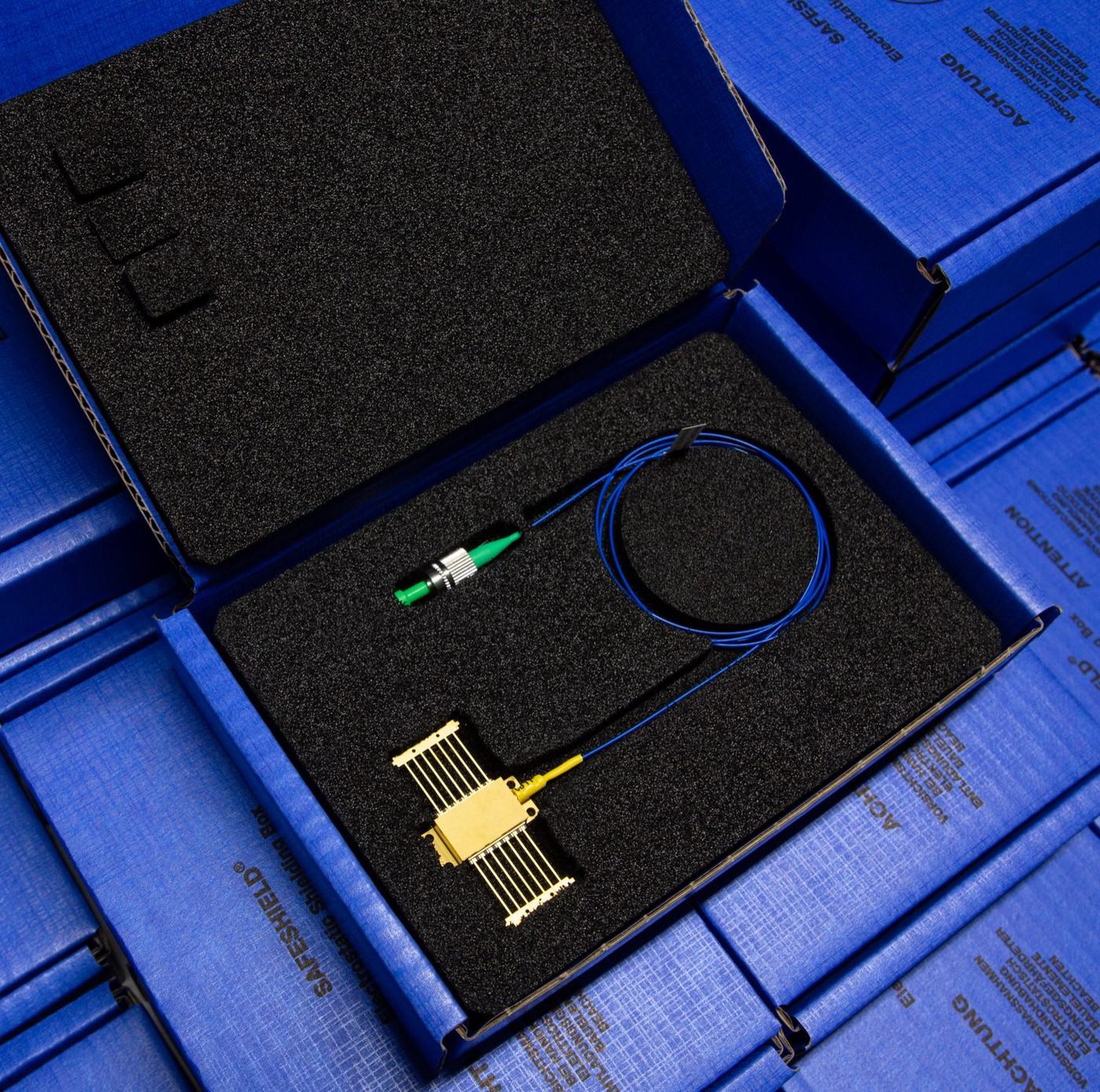
Luna is an integrated RGB area luminator — a single module that combines red, green and blue laser sources into a uniform full-colour illumination field for LCoS-class micro-displays.
Neptune is a pointer luminator: it produces one circular beam for laser-beam-scanning (LBS-Holo) displays and is sampling today. Luna is an area luminator: it produces a uniform full-field for LCoS-class projection, arriving in the second half of 2026.
Luna targets single-mode red, green and blue at 450 / 520 / 640 nm. Luminance, étendue and package footprint are marked “to confirm” and will be published with the datasheet at release.
Luna is scheduled to begin sampling to design partners in the second half of 2026. Register your interest to be notified as evaluation access opens.
Luna is built for LCoS-class and micro-display architectures that need a uniform full-colour backlight — smart glasses, HUDs and pico-projection engines.
Yes. Like Neptune, Luna is built on wafer-scale semiconductor processes, so quality and cost scale the way they do for chips.
Luna is engineered for Class 1 eye-safe operation in near-eye AR. Full compliance details accompany the datasheet at release.
Reserve a Luna evaluation kit from the section above, or talk to our team to scope an LCoS integration ahead of sampling.
Luna is the LCoS-Series area luminator. For laser-beam-scanning designs you can start now, Neptune is the LBS-Holo Series laserchip — sampling today, on the same integrated photonics platform.
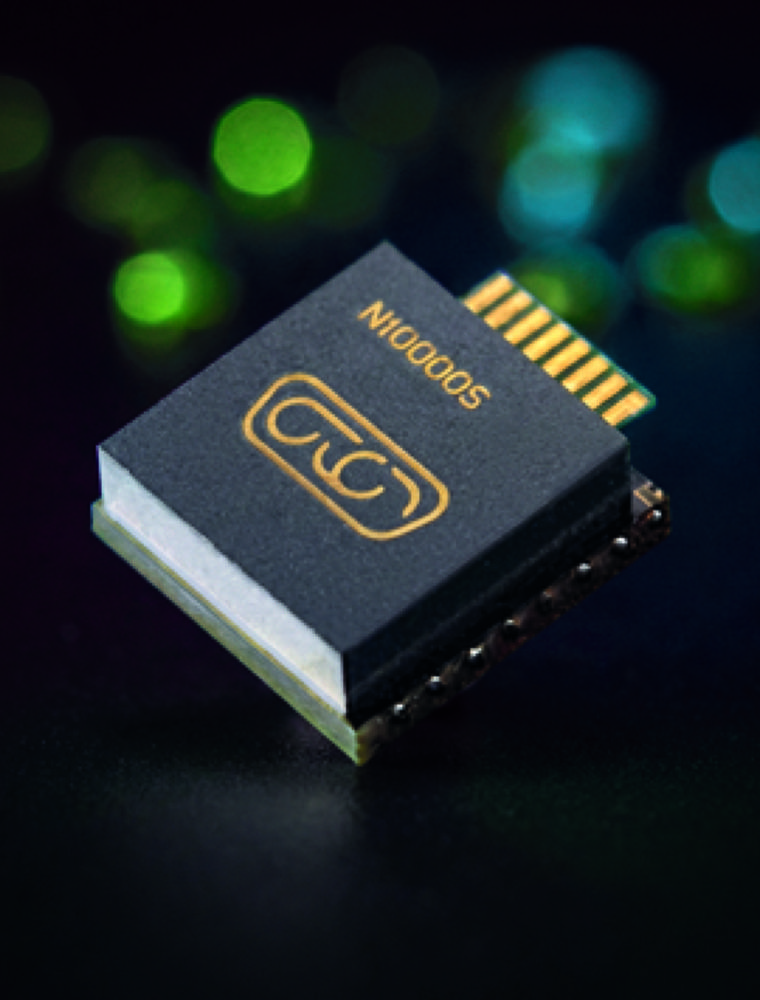
The smallest full-colour RGB laser engine for AR — red, green and blue integrated on a single chip. Available today.
Luna ships in the second half of 2026. Talk to our engineers about your LCoS display architecture and we'll line up evaluation access as samples become available.


