Fully integrated RGB laser engine
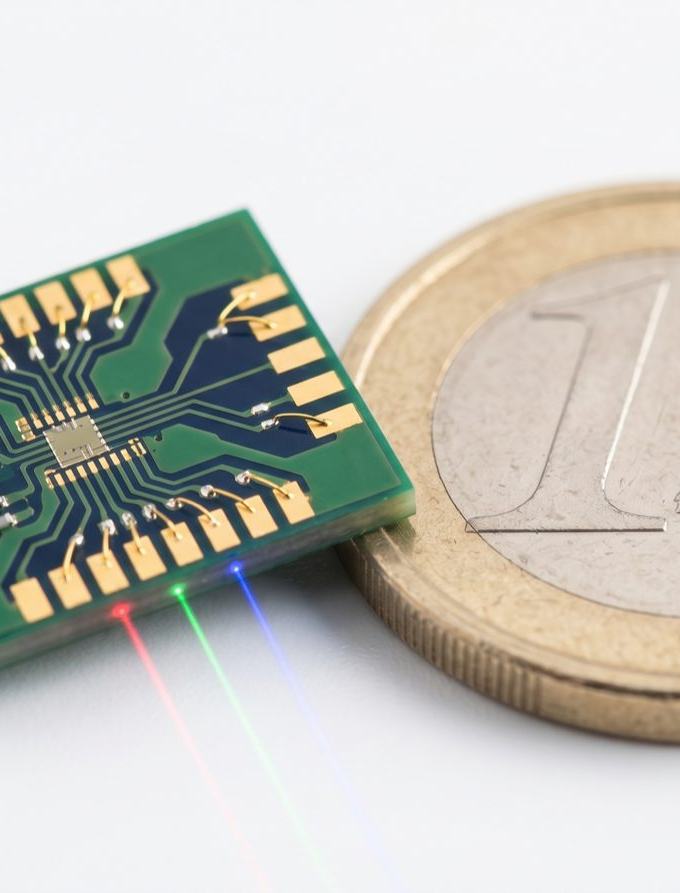
Combines red, green and blue lasers on a single chip. Produces one combined RGB beam for projection applications. The first fully integrated miniature RGB laser engine.
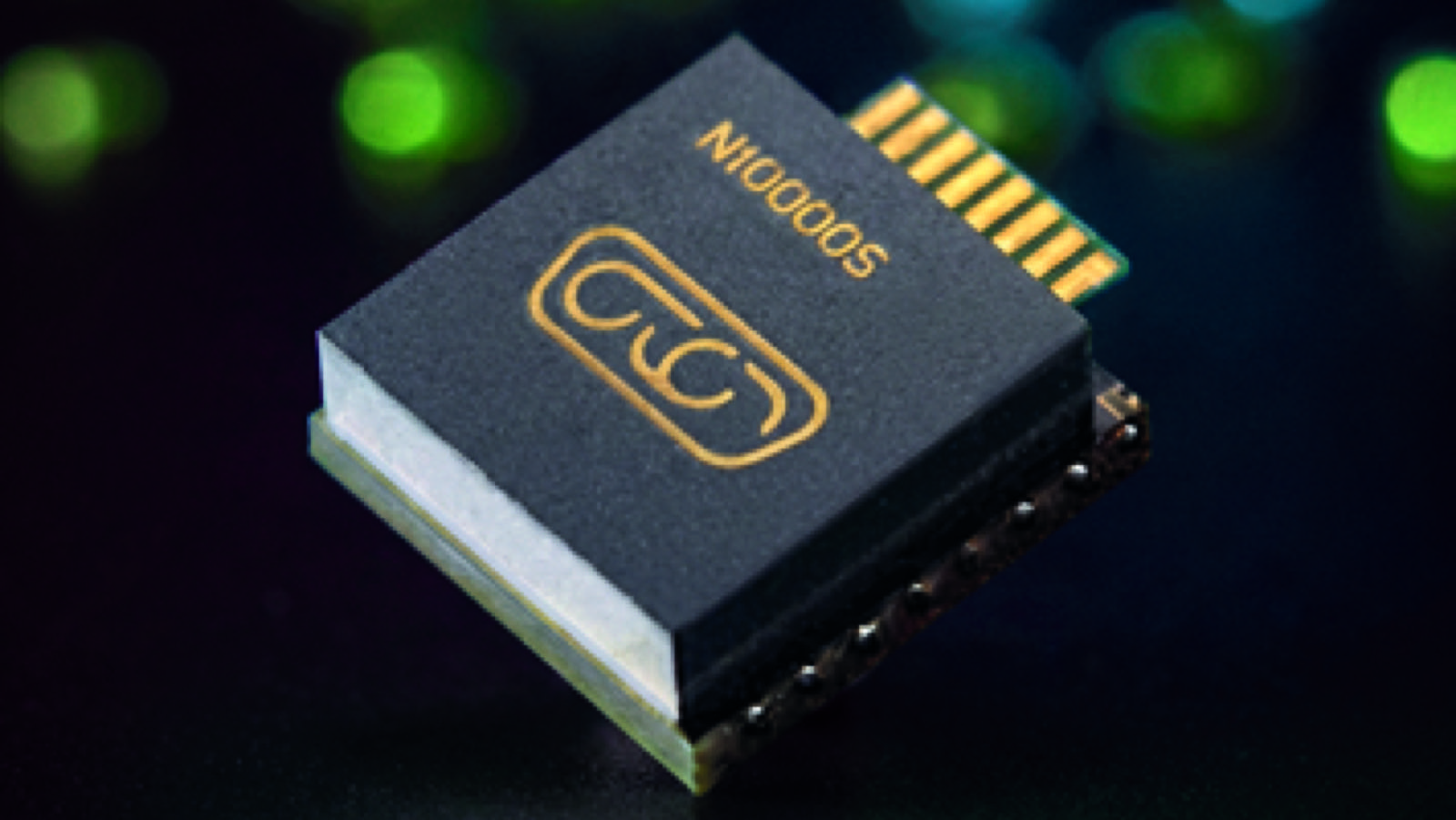
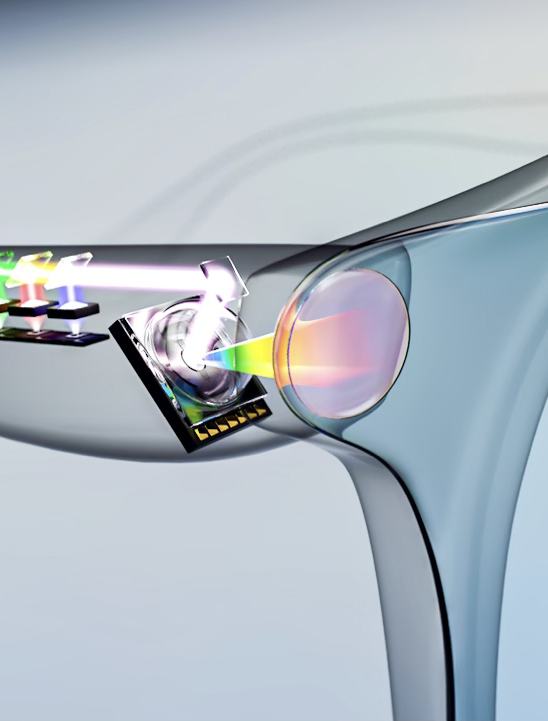
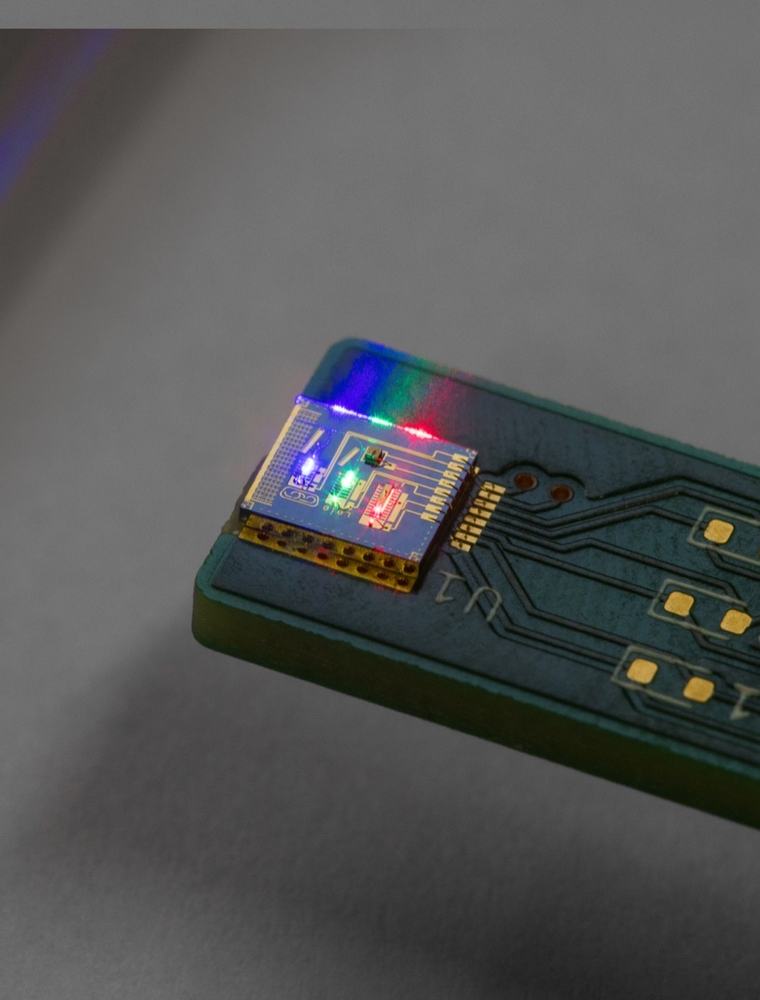
Neptune grows single-mode red, green and blue sources directly on the chip, then merges them through integrated, factory-aligned optics into one symmetric RGB beam — no discrete modules to align.
01 · Grow RGB on chip
Single-mode red, green and blue laser sources are grown directly on one chip.
02 · Combine & align
Integrated, factory-aligned optics merge the three colours — no discrete modules to align.
03 · One circular beam
The result is a single symmetric RGB beam, ready to couple into scanning or waveguide optics.
Neptune grows single-mode red, green and blue sources directly on the chip, then merges them through integrated, factory-aligned optics into one symmetric RGB beam — no discrete modules to align.
01 · Grow RGB on chip
Single-mode red, green and blue laser sources are grown directly on one chip.
02 · Combine & align
Integrated, factory-aligned optics merge the three colours — no discrete modules to align.
03 · One circular beam
The result is a single symmetric RGB beam, ready to couple into scanning or waveguide optics.
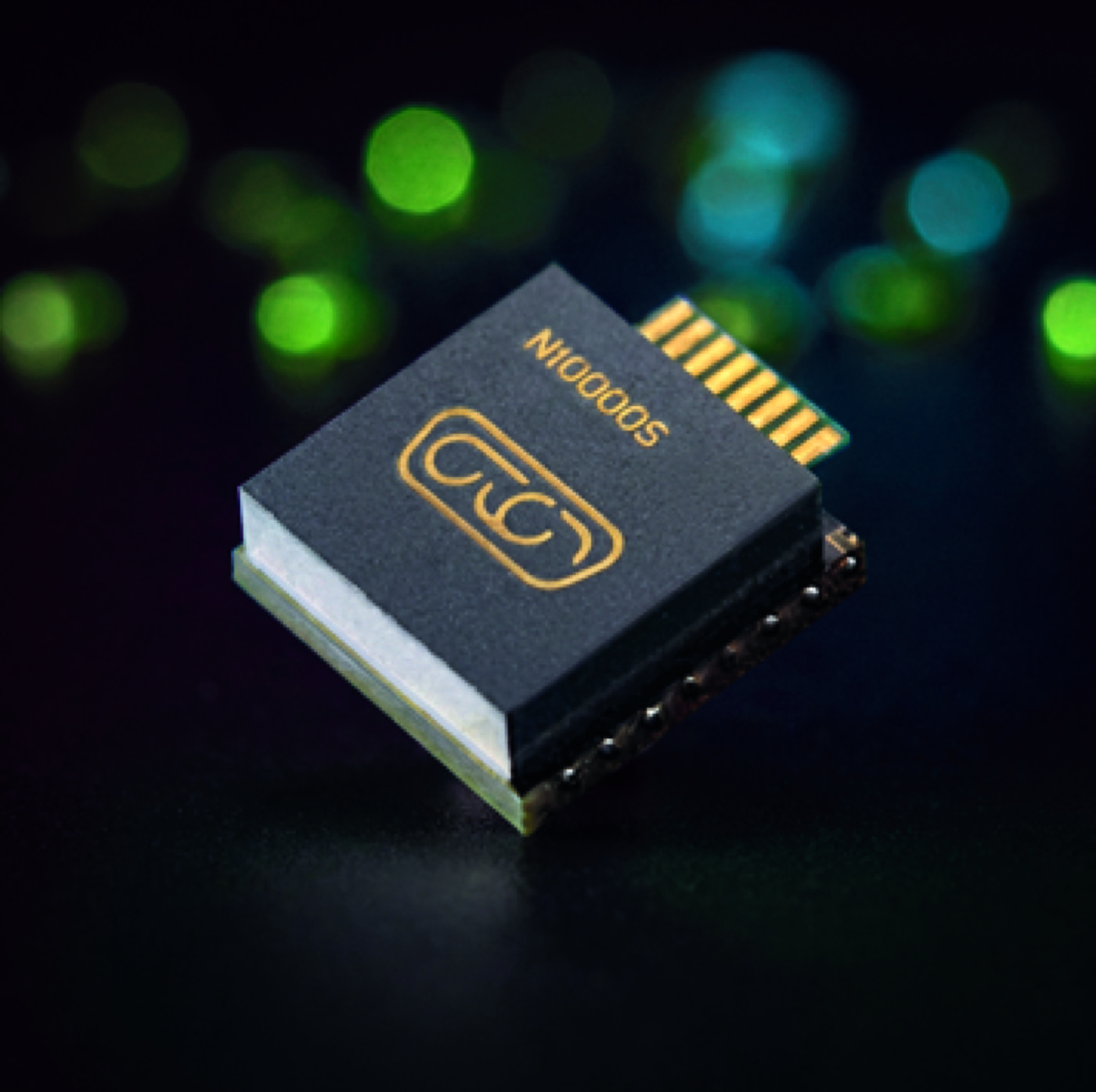
| Integrated RGB light source | Combines red, green, blue lasers on chip |
|---|---|
| Miniature size | 4 × 4.5 × 1.5 mm package |
| Circular beam output | Symmetric beam profile |
| Single-mode wavelengths | RGB 450 / 520 / 639 nm |
| Optical power output | 15–25 mW typical |
| High efficiency | Potential 20× improvement vs LCoS |
| Temperature monitoring | On-chip NTC sensor |
| Wide operating range | −10 °C to 70 °C |
| High brightness / HDR | Suitable for outdoor AR |
Our pointer luminator: a fully integrated RGB laser engine combining red, green and blue sources into a single circular beam — the first miniature RGB laserchip for scanning AR displays.
| Wavelengths | 450 / 520 / 639 nm |
|---|---|
| Optical output power | 25 / 15 / 25 mW |
| Beam quality | M² ≈ 1 |
| Package size | 0.024 cc |
| Operating temperature | −10 °C to 70 °C |
| Series | LBS-Holo |
Full-colour, see-through overlays in lightweight consumer eyewear you can wear all day.
Bright, compact projection for automotive and aviation HUDs that stay legible in daylight.
A tiny RGB light engine for embedded and handheld pico-projectors where every mm³ counts.

A circular beam couples cleanly into laser-beam-scanning and diffractive waveguide optics.
Engineered for safe near-eye operation
Compliant materials and processes
Proprietary integrated photonics
Standard semiconductor production
Kit Contents:
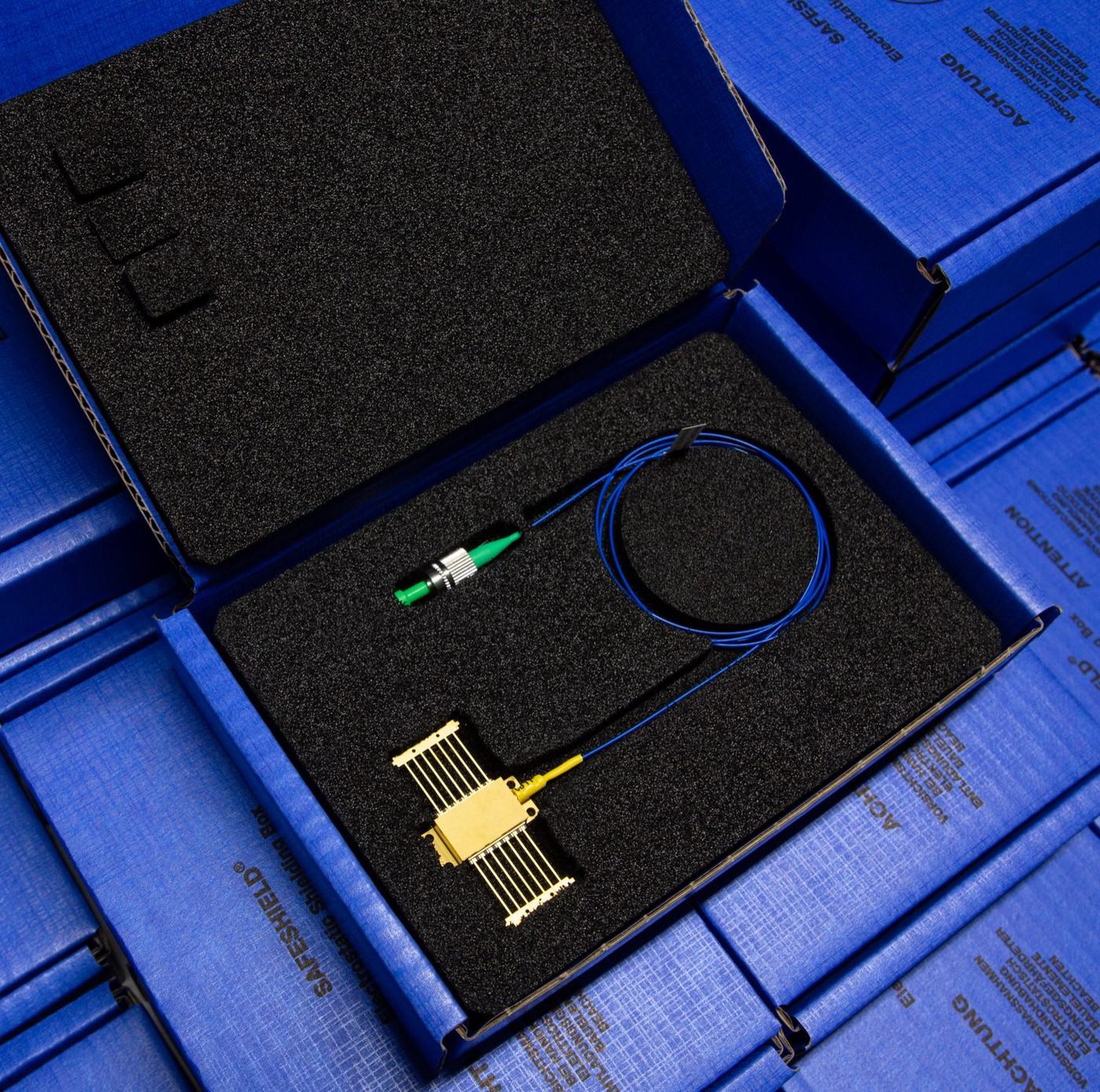
A fully integrated photonic chip that combines red, green and blue laser sources — and the optics that combine them — into a single miniature RGB light engine for scanning AR displays.
Neptune is our pointer luminator for laser-beam-scanning (LBS-Holo) displays and is sampling today. Luna is an area luminator for LCoS-class full-field projection, arriving in the second half of 2026.
Single-mode red, green and blue at 450 / 520 / 640 nm, with typical optical output of 15–25 mW per channel.
The Neptune package measures just 4 × 4.5 × 1.5 mm, including a protective cap over the laser diodes and wire bonds.
Integrated optics reduce losses dramatically — a potential 20× improvement in efficiency versus conventional LCoS architectures.
Yes. The platform is built on wafer-scale semiconductor processes, so quality and cost scale the same way they do for chips.
−10 °C to 70 °C, with an on-chip NTC sensor for precise thermal monitoring and stable output.
Order the Neptune evaluation kit from the section above, or get in touch with our team and we'll help you scope an integration.
Neptune is the LBS-Holo Series laserchip. For LCoS-based designs, Luna is the companion product — built on the same integrated photonics platform.
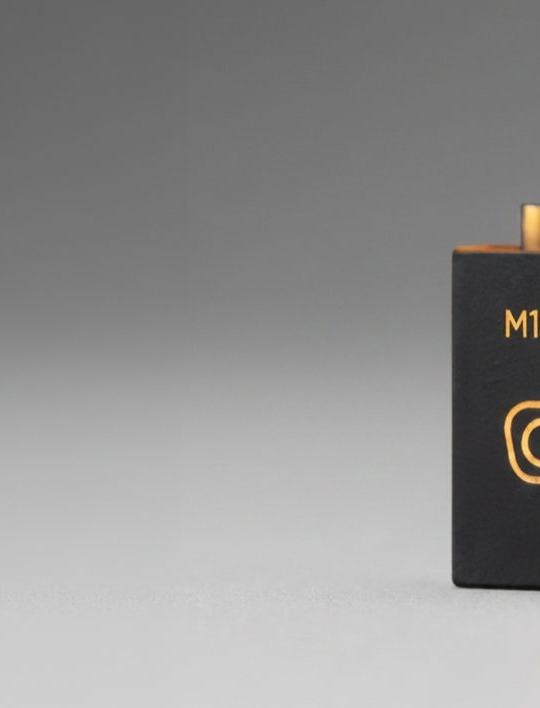
An LCoS-Series display engine for compact, glasses-ready AR. Coming second half 2026.
Talk to our engineers about your AR display architecture, and we'll help you scope the integration end to end.


